How TRT monitoring and follow-up labs work
By Sarah · Updated 2026-07-23
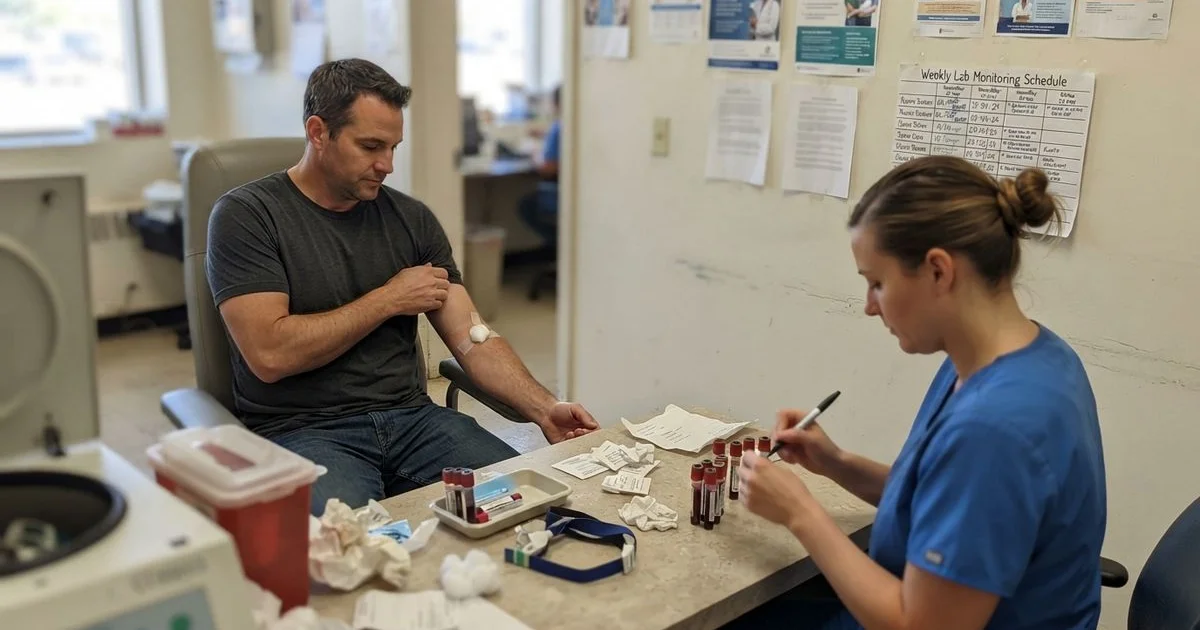
Starting TRT is the easy part. Staying on it safely depends on what happens after: whether your provider actually rechecks your labs on schedule and adjusts your plan when something shifts. A clinic that treats the first prescription as the finish line isn’t managing your care the way it should be.
The typical monitoring timeline
| Timing | What’s usually checked | Why |
|---|---|---|
| Baseline, before starting | Total and free testosterone, hematocrit, PSA, lipid panel | Establishes your starting point and rules out other conditions |
| 6 to 12 weeks after starting or changing dose | Testosterone, estradiol, hematocrit | Confirms your dose is landing in the target range and levels have stabilized |
| Every 6 months once stable | Testosterone, hematocrit, PSA | Ongoing safety monitoring and dose confirmation |
| Annually, or as needed | Full panel review, symptom check-in | Catches slower-moving changes and confirms treatment is still the right fit |
This schedule can shift based on your specific situation. Men starting at a higher dose, adjusting frequently, or managing an existing health condition may need more frequent checks.
What each piece of monitoring is actually for
Testosterone and estradiol levels confirm your dose is producing a result in the intended range, not too low to help and not so high it’s driving side effects.
Hematocrit tracks red blood cell concentration, which can rise on testosterone therapy and needs to stay within a safe range to avoid increased clotting risk.
PSA is tracked because testosterone therapy can accelerate growth of an existing, undetected prostate issue, so a rising trend needs follow-up regardless of your age.
Symptom check-ins matter alongside the numbers. Labs that look fine on paper don’t always mean the dose or method is working well for you day to day, and the reverse is also true.

What good follow-up care looks like in practice
A men’s health and Low-T clinic that’s managing this well will proactively schedule your next lab draw rather than waiting for you to ask, explain what each result means in plain terms, and adjust your plan when a number trends the wrong way. If a clinic has never asked you to come back for labs after your first prescription, that’s a gap worth raising directly, or a sign it’s time to find a provider who takes monitoring seriously. If you’re not sure what to expect walking in, our guide to your first TRT appointment covers the intake process this follow-up schedule builds on.
Why the timing of the blood draw matters
Testosterone naturally follows a daily rhythm, peaking in the morning and dropping through the day. If your follow-up labs are drawn at inconsistent times, morning for one visit, afternoon for the next, the numbers can look like they’ve changed when really the draw time is what shifted. A clinic that’s careful about monitoring will ask you to schedule labs at a consistent morning time each visit, which makes it much easier to spot a genuine trend instead of chasing noise in the data.
Keeping your own record
It’s worth asking for copies of your lab results each time, rather than relying on the clinic to remember your history. Having your own record makes it easier to spot trends over time, ask informed questions at your next visit, and get a second opinion if you ever want one. Some clinics offer this through a patient portal; others will email a PDF if you ask. Either way, it’s a small habit that pays off if you ever switch providers or want to compare your trajectory over a year or more.
What to do between scheduled labs
If you notice new or worsening symptoms between visits, whether that’s mood changes, unusual fatigue, or something more urgent like chest pain or swelling, don’t wait for your next scheduled draw. A quick call to your provider can determine whether an earlier check-in is warranted.
This is general information about typical monitoring schedules and isn’t a substitute for guidance from your own provider, who will tailor your follow-up plan to your specific labs and health history.
Our methodology page explains how we weigh follow-up and monitoring practices when scoring clinics, and the Florida TRT Guide homepage is a good place to compare providers.
FAQ
- How soon after starting TRT will I get follow-up labs?
- Most providers recheck labs 6 to 12 weeks after starting or changing your dose, since that's roughly how long it takes levels to stabilize on a new protocol.
- How often are labs needed once I'm stable?
- Once your dose is settled and your levels look good, most providers move to roughly every 6 months for ongoing monitoring, sometimes annually if everything has stayed consistent for a while.
- What happens if a follow-up lab comes back abnormal?
- Your provider should adjust your treatment plan, whether that means changing your dose, adjusting frequency, or in some cases pausing treatment, rather than simply noting the result and continuing unchanged.
- Can I skip follow-up labs if I feel fine?
- It's not a good idea. Some issues, like elevated red blood cell count, don't produce noticeable symptoms until they've become a bigger problem. Feeling good isn't the same as your labs looking good.