Signs of low testosterone: when it's time to get tested
By Sarah · Updated 2026-06-22
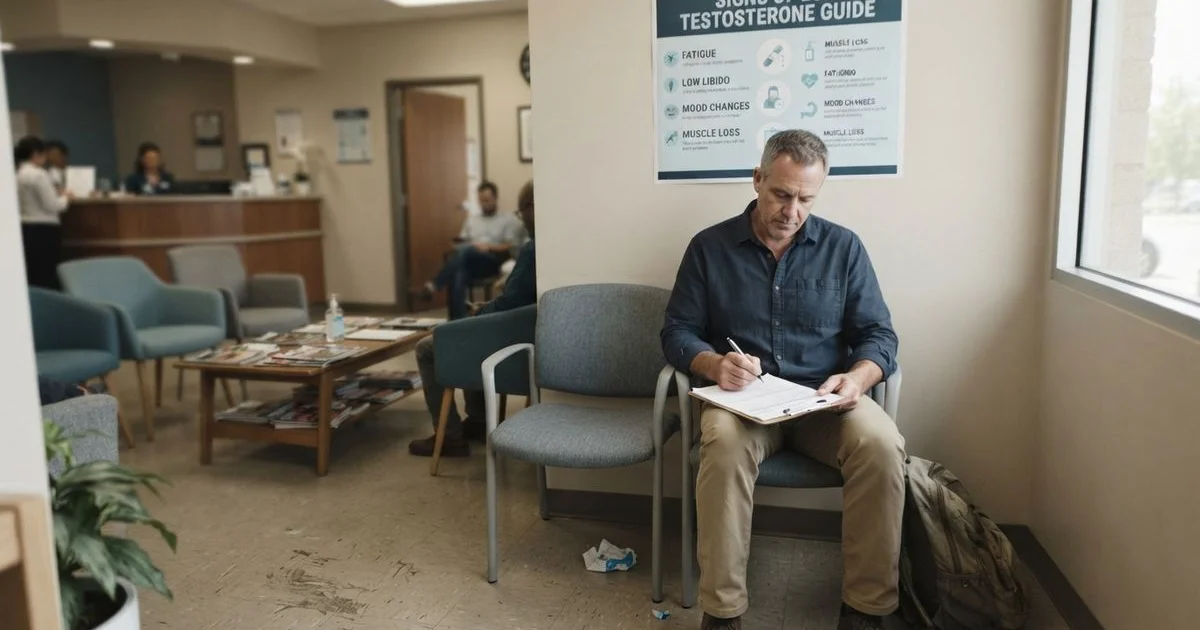
Low testosterone doesn’t usually show up as one dramatic symptom. It shows up as a handful of small, easy-to-explain-away changes that stack up over months: you’re tired even after a full night’s sleep, the gym isn’t giving you results it used to, and your interest in sex has quietly dropped off. None of that screams “hormone problem” on its own, which is exactly why so many men wait years before getting tested.
What low testosterone actually feels like
The symptoms of low testosterone fall into a few clusters, and most men who end up with a confirmed diagnosis recognize themselves in more than one:
- Low energy that doesn’t track with how much you’re sleeping or how hard you’re working
- Reduced sex drive, fewer spontaneous erections, or erections that are harder to maintain
- Loss of muscle mass or strength despite a consistent workout routine
- Increased body fat, particularly around the midsection
- Mood changes: irritability, low motivation, or a flatter emotional baseline than usual
- Trouble concentrating or a sense of mental fog
- Disrupted sleep, independent of any diagnosed sleep condition
One or two of these on their own could point to plenty of other things: poor sleep, stress, thyroid issues, depression, or simply getting older. That overlap is the main reason self-diagnosis doesn’t work here and a lab test does.
Symptoms that often get missed
A few signs don’t make the usual lists but come up often enough to mention. Some men notice their beard or body hair growing in more slowly than it used to. Others notice hot flashes or night sweats, symptoms usually associated with menopause but that can also show up with a significant testosterone drop in men. Bone density loss is another one, invisible day to day but worth knowing about if low testosterone goes untreated for years, since testosterone plays a role in maintaining bone strength.
None of these are common enough to be the main reason someone books a test, but if you’re already noticing the more typical symptoms and one of these rings a bell too, it adds weight to getting checked sooner rather than waiting.
Why age raises the odds, but doesn’t decide it
Testosterone production tends to decline gradually starting in a man’s 30s, and the odds of a clinically low reading go up from there. But plenty of men in their 30s and 40s have low testosterone tied to obesity, poor sleep, chronic stress, certain medications, or an underlying medical condition, and plenty of men in their 60s test in a healthy range. Age shifts the odds; it doesn’t replace the test.
What a real diagnosis requires
A provider who takes this seriously won’t prescribe anything off a symptom checklist. A proper workup looks like this:
| Step | What it involves |
|---|---|
| Symptom review | A conversation about energy, libido, mood, sleep, and physical changes |
| Morning blood draw | Testosterone follows a daily rhythm and peaks in the morning, so labs are drawn early, usually before 10am |
| Confirmation test | A single low reading is typically confirmed with a second morning draw before diagnosis |
| Broader panel | Free testosterone, SHBG, and sometimes LH and FSH help explain why a level is low |
| Ruling out other causes | Thyroid function, sleep apnea, and certain medications can all mimic low T symptoms |
If a clinic offers to start you on testosterone the same day, with no bloodwork and no follow-up plan, that’s a shortcut worth questioning rather than a convenience worth taking.
When it’s worth booking a test
There’s no perfect threshold, but a reasonable rule of thumb: if you’ve noticed two or more of the symptoms above persisting for a few months, and you can’t point to an obvious cause like a rough stretch of poor sleep or a new medication, it’s worth getting a baseline test. That’s true whether you’re 35 or 65. A test doesn’t commit you to treatment. It just gives you a number to work from instead of a guess. And if you do start treatment and later need a break, the guide on stopping or pausing TRT walks through what changes in your body when you do.
From there, the next decision is who you see. Men’s health clinics, urologists, and telehealth programs all offer testosterone testing, and each has a different intake process, so it’s worth understanding what a first visit typically involves before you book one.
This guide is general information, not a substitute for a medical evaluation. Only a blood test and a clinical assessment from a licensed provider can confirm whether your symptoms are related to low testosterone.
If you want to compare how different Florida providers approach testing and treatment, our methodology page explains how we score clinics on credentials, testing practices, and patient feedback, and the Florida TRT Guide homepage is a good starting point for browsing providers by category.
FAQ
- What is the first sign of low testosterone most men notice?
- Fatigue that doesn't improve with sleep and a drop in sex drive are usually the first things men mention to a provider. Neither one alone confirms low T, but together with a couple of other symptoms they're worth a lab test.
- Can low testosterone happen in your 30s?
- Yes. It's less common than in men over 45, but injuries, certain medications, obesity, and some medical conditions can lower testosterone at any adult age. Age is a risk factor, not a requirement.
- Do I need a blood test, or can symptoms alone confirm low T?
- Symptoms alone are never enough for a diagnosis. Clinical guidelines require at least one, and usually two, morning blood tests showing low testosterone alongside symptoms before treatment is appropriate.
- What testosterone level counts as low?
- Most labs flag total testosterone under roughly 300 ng/dL as low, though exact cutoffs vary by lab and provider. A single low reading is usually confirmed with a second morning test before anyone talks about treatment.