Does TRT affect fertility, and how to protect it
By Sarah · Updated 2026-07-30
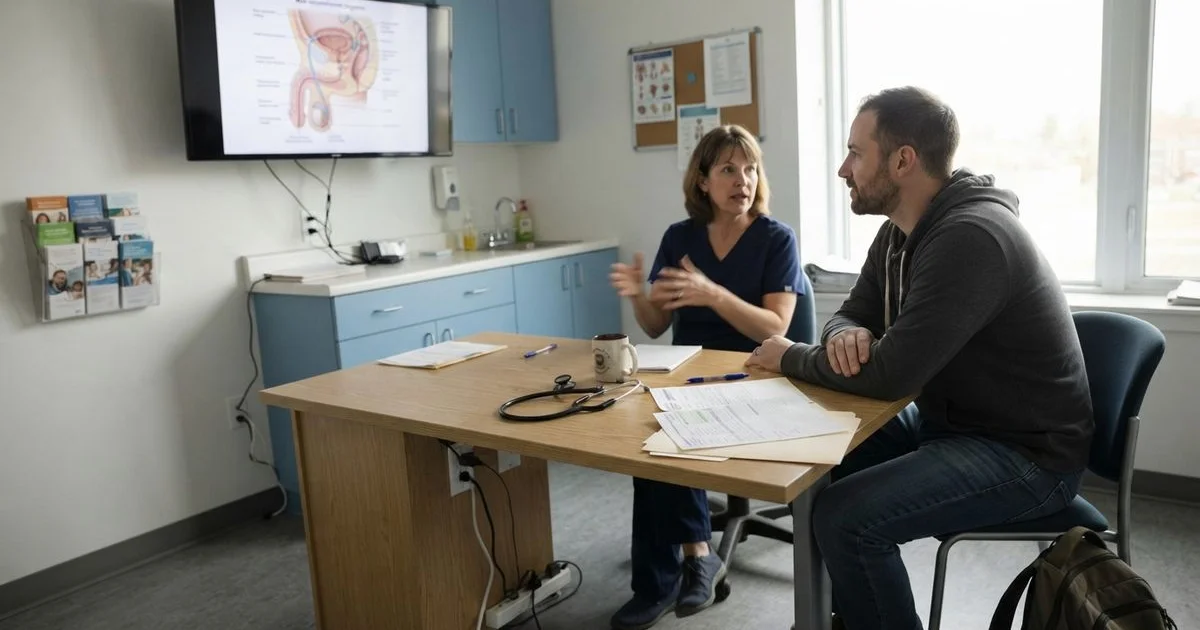
Standard testosterone replacement therapy has a side effect that catches a lot of men off guard: it commonly suppresses your body’s own sperm production. If you’re not planning to have children, this may not matter much to you. If you are, or might be, it’s worth understanding before you start, not after.
How common is this, really
This isn’t a rare edge case that only affects a small number of men. Suppressed sperm production is one of the most consistently observed effects of standard testosterone therapy across studies, which is exactly why fertility-focused providers raise it proactively rather than waiting for a patient to ask. If a clinic hasn’t mentioned fertility at all during your consultation, and having children is any part of your future plans, it’s worth bringing up yourself.
Why this happens
Your body normally produces testosterone through a signaling loop between the brain and testes. When you introduce testosterone from an outside source, that loop senses plenty of testosterone is already present and dials back its own signal, which also reduces the signal that drives sperm production. This is a predictable, well-documented effect of standard testosterone therapy, not a rare complication.
What this means in practice
For most men on standard testosterone therapy, sperm counts drop, sometimes to very low levels, while they’re on treatment. This isn’t necessarily permanent. Many men see fertility return after stopping, though the timeline varies widely, from several months to over a year, and some men don’t fully recover to their prior baseline. How predictable this is for any individual depends on factors like age, how long you’re on treatment, and your starting fertility.
If fertility matters to you right now
This is the conversation to have before you start, not after you’ve been on treatment for a year and decide you want to try for a child. A fertility and urology-based TRT provider can walk through options that may raise testosterone while having less impact on your body’s natural sperm production, as an alternative or complement to standard testosterone therapy, depending on your specific situation and goals. If erectile function is also part of the picture, our guide on TRT and erectile dysfunction covers what testosterone therapy can and can’t fix there.
Questions worth raising with your provider
| Question | Why it matters |
|---|---|
| Is a baseline semen analysis worth doing before I start? | Gives you a real number to compare against later, not a guess |
| Are there approaches that raise testosterone with less impact on fertility? | Relevant if you’re planning children in the near term |
| What’s a realistic timeline if I want to stop and try to conceive later? | Recovery time varies and is worth planning around |
| How will my fertility be monitored while I’m on treatment? | Ongoing semen analysis can catch a bigger-than-expected drop early |
What proactive planning can look like
For men who know they want children in the next few years but also want to address low testosterone symptoms now, planning ahead matters more than reacting later. Some men bank sperm before starting treatment as a precaution, particularly if there’s uncertainty about how long treatment will last or how their fertility will respond after stopping. Others choose an approach designed to raise testosterone while preserving more of their natural sperm production from the start, avoiding the recovery question entirely. Which path makes sense depends on your timeline for having children, your current fertility, and how significant your symptoms are, which is exactly why this is worth a dedicated conversation rather than a footnote at the end of a standard TRT consultation.
Making the decision that fits your timeline
If children aren’t part of your plans, or you’ve already completed your family, this may be a minor consideration. If you’re actively trying to conceive, or think you might want to in the next few years, it’s worth treating as a central part of the decision, not an afterthought your provider mentions once and moves past.
This is general information about a known effect of testosterone therapy, not a prediction of what will happen in your specific case. A fertility specialist or urologist can give you guidance tailored to your health history and family planning goals.
See our methodology page for how we evaluate fertility-focused providers, or browse the Florida TRT Guide homepage to compare clinics.
FAQ
- Does TRT always cause infertility?
- Not permanently for most men, but it commonly suppresses sperm production while you're on it. Fertility often recovers after stopping, though the timeline and extent vary by individual and how long you were on treatment.
- How long does it take for fertility to return after stopping TRT?
- It varies significantly, from a few months to over a year in some cases. Some men don't fully recover their prior sperm counts. This is worth discussing with a fertility-focused provider before starting, not after.
- Are there TRT alternatives that don't affect fertility as much?
- Yes, some approaches stimulate your body's natural testosterone production rather than replacing it directly, which can raise testosterone while having less impact on sperm production. Whether one of these fits your situation is a conversation for a fertility-focused provider.
- Should I get a semen analysis before starting TRT?
- If preserving fertility matters to you, a baseline semen analysis before starting gives you and your provider something concrete to compare against later, rather than guessing at your starting point.